Archive | Writing RSS feed for this section

Fran Lebowitz: “When I’m not writing I feel like a criminal.”

7 Jan

lebowitz

“Not writing is more of a psychological problem than a writing problem. All the time I’m not writing I feel like a criminal. … It’s horrible to feel felonious every second of the day. Especially when it goes on for years. It’s much more relaxing actually to work.”

~ FRAN LEBOWITZ

Dominick Dunne: “Finish your first draft.”

6 Jan

dunne

“The best advice on writing was given to me by my first editor, Michael Korda, of Simon and Schuster, while writing my first book. “Finish your first draft and then we’ll talk,” he said. It took me a long time to realize how good the advice was. Even if you write it wrong, write and finish your first draft. Only then, when you have a flawed whole, do you know what you have to fix.”

~ DOMINICK DUNNE

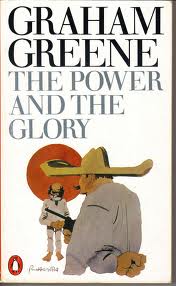
Booknote: The Power and the Glory, by Graham Greene

5 Jan

the power and the gloryOver the years, I’ve read all of Graham Greene’s books. His writing is impeccable, and his characters are often trapped in some backwater of life, whether literal or figurative, in which faith struggles against despair.

This novel centers on a “whisky priest”, hunted and hounded by Marxist “Red Shirts” in the service of an anti-clerical Mexican government that in certain states has driven the Catholic Church into hiding. This sounds like SF, but actually happened in the mid-1930s.

As do many Greene characters, the nameless priest carries a heavy load of guilt. In his case, it’s the illegitimate child he fathered during the years when priests were de-celibatized and made to act like real men. Now he’s escaped into the jungle, running from the Red Shirts and administering baptisms, confessions and last rites to faithful peasants.

It’s a bit of an allegory, with the priest as Christ, a peasant Judas and a Marxist lieutenant as Pilate. The novel moves as slowly as an anaconda on a heavily humid day, but the language is deft and the story is as old and rich as the Bible.

~ Alan, Toronto, 5 Jan 2013

F. Scott Fitzgerald: “Confine yourself to simple words.”

5 Jan

Fitzgerald

“Upon mature consideration I advise you to go no farther with your vocabulary. If you have a lot of words they’ll become like some muscle you’ve developed that you’re compelled to use, and you must use this one in expressing yourself or in criticizing others. It’s hard to say who’ll punish you the most for this, the dumb people who don’t know what you’re talking about or the learned ones who do. But wallop you they will and you’ll be forced to confine yourself to pen and paper.

Then you’ll be a writer and may God have mercy on your soul.

No! A thousand times no! Far, far better confine yourself to a few simple expressions in life, the ones that served billions upon countless billions of our forefathers and still serve admirably all but a tiny handful of those at present clinging to the earth’s crust…

So forget all that has hitherto attracted you in our complicated system of grunts and go back to those fundamental ones that have stood the test of time.”

~ F. SCOTT FITZGERALD, in a letter to Andrew Turnbull

Kesey: “Write what you don’t know.”

4 Jan

Ken_Kesey

“One of the dumbest things you were ever taught was to write what you know. Because what you know is usually dull. Remember when you first wanted to be a writer? Eight or 10 years old, reading about thin-lipped heroes flying over mysterious viny jungles toward untold wonders? That’s what you wanted to write about, about what you didn’t know. So. What mysterious time and place don’t we know?”

KEN KESEY

Isaac Asimov (b. Jan 02): “Science gathers knowledge faster than society gathers wisdom.”

2 Jan

Asimov3

“The saddest aspect of life right now is that science gathers knowledge faster than society gathers wisdom.”

~ Isaac Asimov, b. 2 Jan 1920

Hemingway: “We’re all bitched from the start.”

2 Jan

hemingway

“Forget your personal tragedy. We are all bitched from the start and you especially have to be hurt like hell before you can write seriously. But when you get the damned hurt use it—don’t cheat with it. Be as faithful to it as a scientist—but don’t think anything is of any importance because it happens to you or anyone belonging to you.”

~ ERNEST HEMINGWAY, in a letter to F. Scott Fitzgerald